

Sustainable Living at Tru Aquapolis — Built Green, Whitefield Bangalore
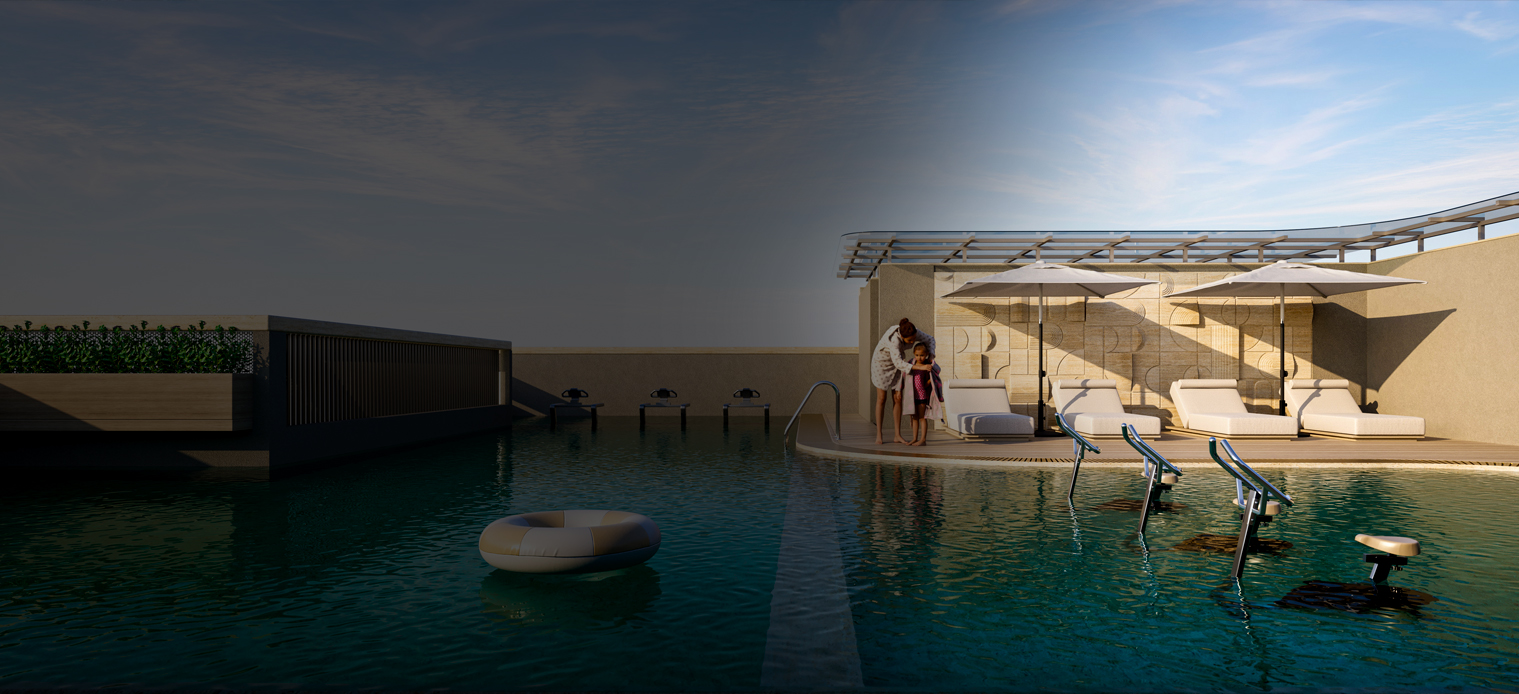
Sustainable Living
Sustainability Starts With What You Choose
Not to Build.
The most significant sustainable decision at Tru Aquapolis was made before a single foundation was dug: to use only 22% of 8.25 acres for construction, leaving 78% as open green space, landscaping, and outdoor living areas. Every other sustainability feature — solar, STP, rainwater harvesting, EV infrastructure — is built on top of that foundational commitment. You cannot green-wash your way to 78% open space. You either build it or you do not.
Environmental Design Features
78% Open Space
22% of land used for building footprint, 78% for landscape, outdoor amenities, and open areas
Environmental Benefit
Reduces urban heat island effect; preserves permeable ground surface; supports biodiversity
Rainwater Harvesting
Collection and underground storage of rooftop and surface rainwater for reuse in landscaping, flushing, and groundwater recharge
Environmental Benefit
Reduces municipal water consumption; supports groundwater table in the Whitefield aquifer zone
Sewage Treatment Plant (STP)
On-campus STP processes grey water for reuse in landscaping and flushing systems — closes the water recycling loop
Environmental Benefit
Reduces wastewater discharge; treats 100% of campus wastewater; reduces freshwater demand
Solar-Powered Common Areas
Photovoltaic panels power common area lighting, campus streetlights, and select amenity area power loads
Environmental Benefit
Reduces grid electricity consumption; lowers maintenance charges; reduces carbon footprint of common areas
EV Charging Infrastructure
EV charging points provisioned in basement parking — ready for Bangalore's growing electric vehicle population
Environmental Benefit
Reduces carbon emissions from resident transport; future-proofs parking infrastructure
Native Landscape Planting
Landscaping design prioritising native and locally-adapted plant species over exotic or water-intensive plantings
Environmental Benefit
Reduces irrigation demand; supports local pollinators; lower maintenance requirement
LED Lighting Throughout
LED technology in all common area lighting, campus pathways, and external fixtures
Environmental Benefit
60–75% lower energy consumption vs conventional lighting; longer replacement cycles
Piped Natural Gas
PNG (Piped Natural Gas) to all apartments replaces LPG cylinders
Environmental Benefit
Lower carbon intensity than LPG; safer; eliminates cylinder delivery logistics for residents
How Sustainability Reduces Your Cost of Living
Sustainable building features are not just environmentally beneficial — they directly reduce the cost of living for residents. The financial case for sustainable design at Tru Aquapolis:
Solar Common Area Power
Reduces maintenance charges by lowering the campus's electricity bill — the reduction is passed directly to residents.
Learn moreSTP-Treated Water Reuse
Reduces the campus's municipal water consumption, significantly reducing water charges in maintenance costs.
Learn moreRainwater Harvesting
Reduces dependency on municipal water supply during Bangalore's dry season — reducing supply interruption risk.
Learn moreEV Charging Infrastructure
Supports lower-cost electric vehicle ownership directly from your parking spot — no external charging dependency.
Learn morePNG Connection
Eliminates the ₹900–1,200/month cost of LPG cylinders and the complete inconvenience of cylinder delivery.
Learn more100%
Fibre Coverage
50+
EV Charging Points
30%
Energy Savings
24/7
Smart Monitoring
The 78% Open Space Standard
To contextualise 78% open space: BBMP's typical FAR (Floor Area Ratio) regulations and development control rules in Bangalore do not mandate this level of open space preservation for high-rise projects. Tru Aquapolis's 78% open space allocation is a voluntary commitment that exceeds regulatory requirements — a developer choice, not a regulatory constraint.
It reflects a philosophy about what a residential campus should feel like to live in.